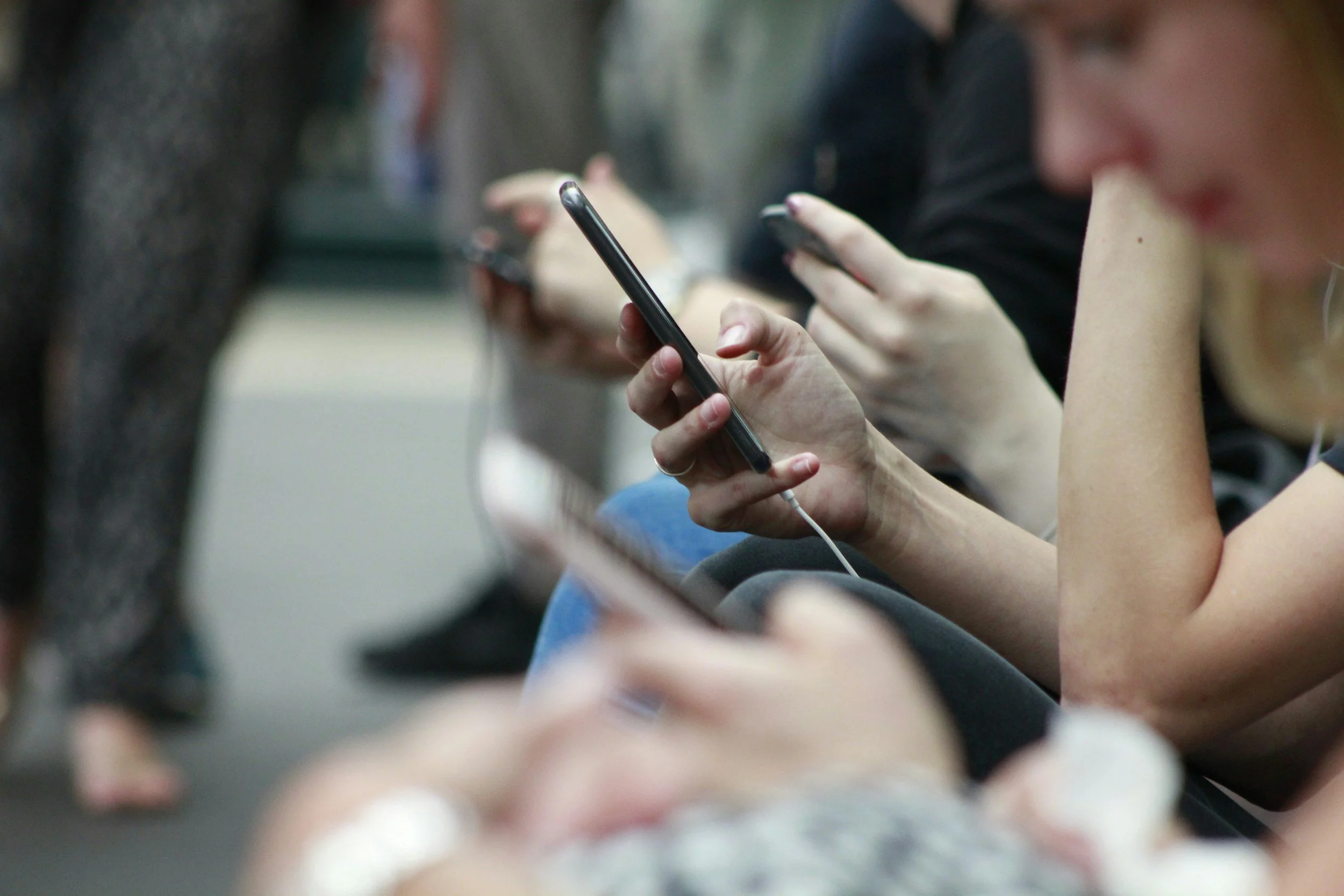
It’s becoming harder not to notice.
Everywhere I look, people are physically present but emotionally absent.
In hallways, in elevators, in cafés, in office corridors, in restaurants, on sidewalks. Heads down. Eyes fixed on screens. Fingers scrolling. Earbuds in. Faces blank. We pass each other like ghosts. No eye contact. No smile. No hello. Not even that small human acknowledgment that says, I see you.
And maybe that’s what bothers me most.
Not the phones themselves.
But what they are slowly replacing.
Conversation. Presence. Curiosity. Warmth. Attention. Connection.
Even in organizations, where collaboration and people are supposed to matter, I see it happening. People walking past one another with their faces buried in their devices, as though the person crossing them is far less important than whatever is glowing on a screen. We are losing the habit of greeting. Losing the instinct to pause. Losing the simple grace of noticing another human being.
And outside of work, it feels even sadder.
People sit down for lunches and dinners together, but they are not really together. One person is speaking, the other is half-listening and half-scrolling. Couples sit across from each other, each locked into separate digital worlds. Families travel to beautiful places, but instead of soaking in the moment, they are busy documenting it, posting it, measuring it.
I recently saw a couple out for a meal. Both were on their phones. No conversation. No laughter. No shared glance. Just two people sitting across from each other in silence, connected to everything except the person right in front of them.
Another time, I noticed a woman looking longingly at her husband while he remained glued to his phone. That look stayed with me. It said so much without words. It said: I am here. I am waiting. I wish you would come back to this moment with me.
And then today, I saw a family of four in the mountains. They walked in, the father, excited, asked his wife whether she had made a reel of the stunning view around them. The kids were clamoring for their attention, and the father was busy posting the reel. Before anything else could be said, their young child, no older than seven or eight, asked, “How many likes did you get?” Papaaaaaaa, “how many likes did you get?”
That question hit me harder than it should have.
Because what does it say about the world we are handing to our children when their first instinct is not wonder, not joy, not awe, but validation? Not “How beautiful.” Not “Can we stay here longer?” Not “Look at those mountains.” But “How many likes?”
We are teaching people to experience life through performance.
To measure moments by reaction.
To interrupt connection for content.
To value visibility more than presence.
And slowly, dangerously, we are losing the art of being with each other.
Real connection asks something of us. It asks us to listen not just to words, but to pauses. To notice tone. To read expressions. To catch what someone is feeling beneath what they are saying. It asks us to be patient enough for conversations to unfold naturally. To stay long enough to hear the unfinished sentence, the hidden worry, the excitement someone is trying to share.
But phones have trained us differently.
They have trained us to skim.
To react instantly.
To switch focus every few seconds.
To chase novelty.
To split our attention until nobody gets the full version of us.
And when that habit spills into our relationships, people feel it.
They feel when you are listening only halfway.
They feel when your eyes keep drifting to a screen.
They feel when their presence is competing with notifications.
They feel when they are no longer more interesting than your feed.
We talk a lot about communication these days. But communication is not just speaking. It is receiving. It is paying attention. It is making someone feel heard. And you cannot do that well when your mind is elsewhere, waiting for the next buzz, the next update, the next distraction.
What scares me is not just that adults are doing this.
It is that children are watching us.
They are learning what matters by observing what we pay attention to. If they grow up seeing parents interrupt sunsets for reels, meals for messages, conversations for scrolling, then what exactly are they learning about love? About presence? About relationships? About what deserves their full attention?
We may be raising a generation that knows how to post, but not how to notice.
How to broadcast, but not how to bond.
How to collect likes, but not how to sit with another person’s loneliness, joy, silence, or pain.
And that loss is bigger than we think.
Because relationships do not usually fall apart in one dramatic moment. They erode quietly. Through repeated inattention. Through missed cues. Through small dismissals. Through moments where one person reaches out and the other never really looks up.
Connection is built in tiny ways.
In the smile when someone enters the room.
In the eye contact that says, you matter.
In the undistracted conversation over coffee.
In the phone left face down during dinner.
In the willingness to really listen.
In the decision to be fully here, while we are here.
Maybe that is where we begin again.
Not with grand declarations.
Not with digital detox slogans.
Just with small acts of return.
Look up when you walk past someone.
Say hello.
Meet someone’s eyes.
Put the phone away at the table.
Let a beautiful place be beautiful without turning it into content.
Let a loved one finish their story without dividing your attention.
Teach children that a mountain is not a backdrop for approval, but something to stand before in wonder.
We do not need fewer ways to connect.
We need to remember what connection actually is.
It is not constant access.
It is not instant replies.
It is not sharing everything.
It is not being online together.
It is presence.
And presence, once lost, is not easily replaced.
So maybe the real question is not whether we are spending too much time on our phones.
Maybe the real question is this:
What are we no longer seeing, hearing, or feeling because of them?
And how many relationships will become quietly emptier before we finally decide to look up?