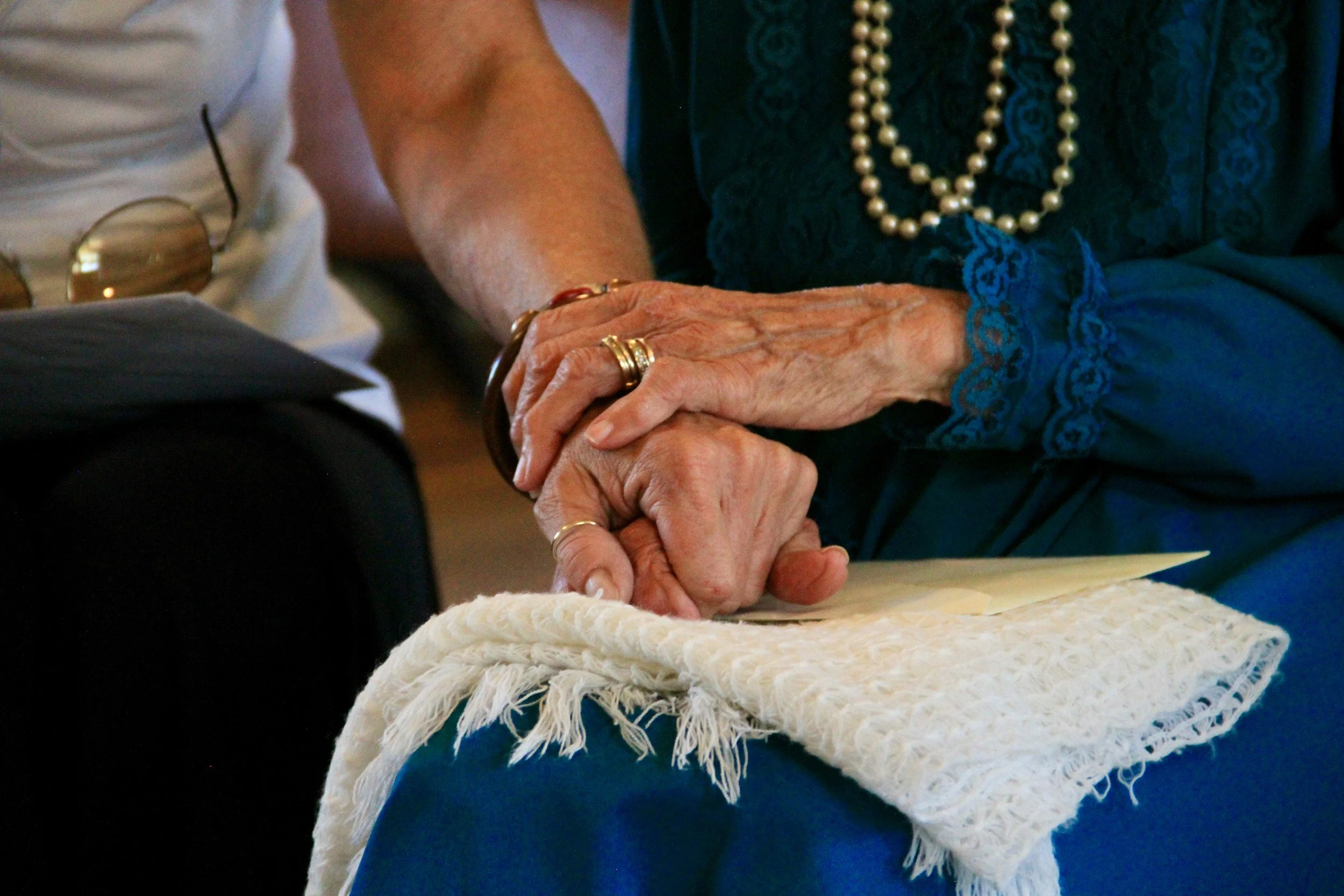
When we hear the word caregiving, most of us picture something tangible. Helping someone bathe. Preparing their meals. Managing medication. Assisting them in and out of bed. Accompanying them to medical appointments. Providing the physical support they can no longer provide for themselves.
But there is another kind of caregiving that is much harder to see.
It exists in families where an older parent may still be active, independent and deeply engaged with life.
They may still work. They may go for their morning walks, meet friends, travel, read, debate politics, manage their own affairs and make their own decisions.
There may, in fact, be no physical caregiving involved at all.
And yet, caregiving is happening. Quietly. In the background.
It exists in the remembering, anticipating, arranging, checking, troubleshooting and worrying that gradually become woven into everyday family life.
It is the mental load of caring for someone who does not need to be looked after, but whom you increasingly find yourself looking out for. And there is a significant difference between the two.
The thousand little things
Sometimes caregiving looks remarkably ordinary.
An elderly parent calls because something has gone wrong on the computer. A website that worked perfectly well last month now wants another password, another OTP, another verification step. A form has to be uploaded. A document has disappeared somewhere into a downloads folder. An app has updated itself and everything suddenly looks different.
So a son or daughter steps in. They sort it out. Five minutes here. Fifteen minutes there.
Then perhaps the television refuses to cooperate. There are two remotes, three input options and a streaming service demanding a login. Someone patiently explains which button to press, or comes over and fixes whatever mysterious sequence of buttons has resulted in a blank screen.
Nobody calls this caregiving. It is simply, “Can you help me with this?”
And of course you do.
Then there are conversations. Perhaps a parent is becoming a little hard of hearing. You repeat a sentence. Then repeat it again.
You learn not to speak from another room. You make sure they have actually heard an important piece of information rather than assuming they have. Sometimes what appears to be disagreement is simply something that wasn't heard correctly in the first place.
There may be occasional forgotten details too. An appointment mentioned yesterday. The name of someone they met. Where a particular document was kept. Whether something was already discussed.
Usually these are tiny lapses…the ordinary imperfections of an ageing mind.
But somebody else begins remembering alongside them.
I'll remind Dad about that.
Let me write it down for Mom.
I'll call before the appointment.
I'll keep a copy too, just in case.
And almost without noticing, another person's to-do list begins taking up residence inside your own.
The emotional calculations
Then there are the things nobody puts on a list.
A parent sounds unusually tired on the phone.
Is it just a long day?
They seem irritable.
Are they annoyed, overtired, uncomfortable, or perhaps not feeling well?
They are quieter than usual at dinner.
Should you ask? Or leave them alone?
They say they are perfectly capable of doing something themselves. And they probably are.
So do you step in?
Do you offer?
Do you insist?
Or does insisting begin to chip away at an independence they have every right to preserve?
This is where caring for an ageing parent becomes an extraordinarily delicate balancing act.
Love says: protect them.
Respect says: let them live their life.
I know as an adult child I often live somewhere between the two. And it is a constant maneuvering between these two paths.
The open window in the mind
Perhaps the most exhausting part of this kind of caregiving is that it rarely has a beginning or an end. There is no shift. No moment when you clock in as a caregiver and another when you clock out.
Instead, there is simply a small window that stays open somewhere in the mind.
Have they reached home?
Did they eat?
Was that appointment today?
Is it too hot for that walk? Did they carry that umbrella because it is raining now?
They sounded tired this morning.
I should call later and check on him.
Most of the time, everything is perfectly fine….But the window remains open.
A person can be sitting in a meeting, going for a run, having dinner with friends, travelling or watching a film…and still have that small mental tab running quietly in the background.
It is not necessarily anxiety, though it does feel like that to be honest :) Often, it is simply responsibility shaped by love.
When ordinary plans acquire an extra layer
Ageing also changes the mathematics of everyday planning.
A family outing is no longer simply: Where shall we go?
There may now be another layer of thought:
How long is the drive? How far is the walk from the car? Will there be somewhere comfortable to sit? Is the day becoming too long? Will the restaurant be too noisy for someone who struggles to hear conversation? Are there too many activities packed into one day? Is there a lift? Should someone travel with them?
None of these decisions are dramatic.
Often the older person does not even know these calculations have taken place.
And perhaps that is exactly the point. Good caregiving frequently works quietly enough that the person receiving it continues to experience independence rather than dependence. Someone has simply thought ahead.
The moods we learn to read
Ageing brings emotional changes too, though these are rarely spoken about with the same ease as physical ones.
Patience may occasionally run thinner. Frustration may arrive more quickly. Technology can be maddening. Not hearing a conversation properly can be isolating. Fatigue can alter anyone's mood. Losing ease with things that once required no thought can be deeply frustrating.
Families begin learning the difference between the mood and the person.
Perhaps the sharp response is not really anger.
Perhaps someone is tired.
Perhaps they didn't hear what was said.
Perhaps they are frustrated because something that used to be effortless now requires help.
And the caregiver's task becomes partly interpretive.
When should I engage?
When should I ignore this?
When should I check whether something is wrong?
When is a bad mood simply a bad mood, as all of us are entitled to have?
That emotional calibration takes energy too.
The changing shape of care
Perhaps one of the most poignant parts of ageing is the gradual reversal of roles…not a complete reversal, and certainly not one in which the parent somehow becomes the child.
Older people remain adults with histories, expertise, preferences, personalities and the right to make decisions about their own lives.
But certain gestures change direction.
The person who once asked, “have you reached safely?” may now receive that message from you.
The person who reminded you about appointments may occasionally need a reminder.
The person who once showed you how the world worked may now hand you a smartphone and ask, “What has this thing done now?”
There can be humor in that.
Tenderness too.
And sometimes grief.
Because underneath these ordinary exchanges lies an awareness that time is moving.
Gratitude doesn't cancel exhaustion
This is perhaps the part caregivers find hardest to admit.
You can feel extraordinarily lucky to have an ageing parent in your life and still find the mental responsibility tiring.
Those two feelings do not cancel each other out.
Gratitude does not mean never becoming impatient.
Love does not mean enjoying every request, especially when you may be struggling with fatigue or your own emotions.
Being fortunate does not mean never feeling overwhelmed.
And exhaustion does not mean the person you love has become a burden. Absolutely not!
It simply means that human beings have finite emotional and mental bandwidth.
Yet caregivers are often reluctant to acknowledge this because they compare themselves with people providing far more intensive care.
“But Mom is independent.”
“Dad is doing so well.”
“Other people have it much harder.”
All of that may be true. And still, the mental load exists. Care does not need to be physically demanding before it counts.
Independence has a safety net
One of the great gifts we can give ageing parents is the freedom to remain themselves.
To keep working if they want to.
To walk.
To travel.
To meet friends.
To make decisions.
To have opinions.
To be occasionally stubborn.
To complain.
To laugh.
To continue participating in the world rather than being quietly moved to its margins simply because they have grown older.
Supporting that independence does not mean doing everything for someone.
Often, it means doing very little. But doing the right little things.
Fixing something. Remembering something. Making a phone call. Thinking ahead. Checking in. Being available. Knowing when to intervene. And, perhaps most importantly, knowing when not to.
The goal is not to remove autonomy. It is to build a safety net underneath it. And safety nets, however invisible, still have to be held by someone.
We need a wider definition of caregiving
Perhaps it is time we broadened the way we think about care.
Caregiving is not only bathing, feeding, lifting, medicating and nursing.
Sometimes caregiving is tech support.
Sometimes it is repeating a sentence without irritation.
Sometimes it is becoming the family's backup memory.
Sometimes it is making a booking, sorting out paperwork or negotiating a confusing digital system.
Sometimes it is quietly changing a plan so that everyone can participate comfortably without announcing why.
Sometimes it is reading a mood.
Sometimes it is calling casually when what you are really doing is checking that everything is okay.
Sometimes it is watching without appearing to watch.
And sometimes it is doing absolutely nothing…because respecting someone's independence is the kindest thing you can do.
None of these acts is particularly dramatic. That is why they are so easy to miss.
There are no photographs of anticipation. No one sees the dozen small calculations that happen before an outing, a journey or an appointment. No one sees the mental reminders accumulating throughout the day. No one sees the emotional adjustment involved in knowing when to help and when to stand back.
Yet all of it is care.
The mental load of caregiving often begins long before physical caregiving does.
It begins in that subtle transition from having a parent who worries about you to discovering that, somewhere along the way, you have begun worrying about them too.
Not because they have stopped living their lives. But because they are still living them.
And you want, fiercely and tenderly, for them to be able to keep doing so for as long as possible.
Perhaps that is one of the quietest forms of love there is:
Not taking over someone's life, but helping to make it possible for them to keep living it on their own terms.